Today is a special kind of Sunday for us. We have men and women here who serve our community in meaningful, often unseen ways, and we’re grateful you’re with us.
But more than anything, today is about something deeper. It’s about the kind of people God calls us to be in the place He has planted us.
When Jesus was asked what matters most, His answer wasn’t complicated, but it was life changing. And it speaks directly to what it means to truly bless a town.
We must love God fully and allow that love to overflow into how we treat, serve, and care for every person God places in our path.
The Ultimate Foundation
Jesus reminds us that vertical love must begin before horizontal love. Matthew 22:37 answers this probing question with, “Thou shalt love the Lord thy God with all thy heart, soul, and mind.”
Think about the context of this passage for a moment. zThe religious leaders of Jesus’ day were experts on the law. By the time of Jesus, the religious leaders had developed an extensive system of commandments and interpretations around the law of God. The total number of rules came to 613 commandments and were derived from the commands in Genesis through Deuteronomy. There were 248 positive commands (“you shall”) and 365 negative commands (“you shall not”). These rules became the thing the religious leaders would spend too much time debating and categorizing. Throughout time, many traditions and interpretations had been woven into the fabric of this ongoing debate. Because the religious leaders spent so much time debating, interpreting, and categorizing the 613 commands, specific questions would often come up for discussion.
In 1971, a fire broke out in a hospital in Glasgow, Scotland. As the fire spread, the staff had to make quick decisions about what to do first. There were many responsibilities pulling at them all at once, but at that moment, everything became clear. They focused on what mattered most, getting patients out safely.
Later, no one talked about paperwork, computers, or medical equipment. In that moment of urgency, all the lesser things fell away, and the most important responsibility rose to the top.
In Matthew 22, deciding which one was the “greatest command” would have been a common question! So, the question in verse 36 that led to Jesus’ answer in verses 37-40 was not a casual part of conversation. This question was actually part of an ongoing debate! The answer to the question posed in verse 36 is less about rules and more about relationship. Jesus took their unending debate about rules and reduced it to what it really was about … relationship!
Jesus told this crowd of people that the greatest command is to love God with everything you have, hold nothing back! Our faith is not about rituals, traditions, and doctrinal debates. Our faith is about our relationship with God, or more specifically our devotion to God.
Devotion to God reshapes our priorities, our attitudes towards others, and how we live in our community.
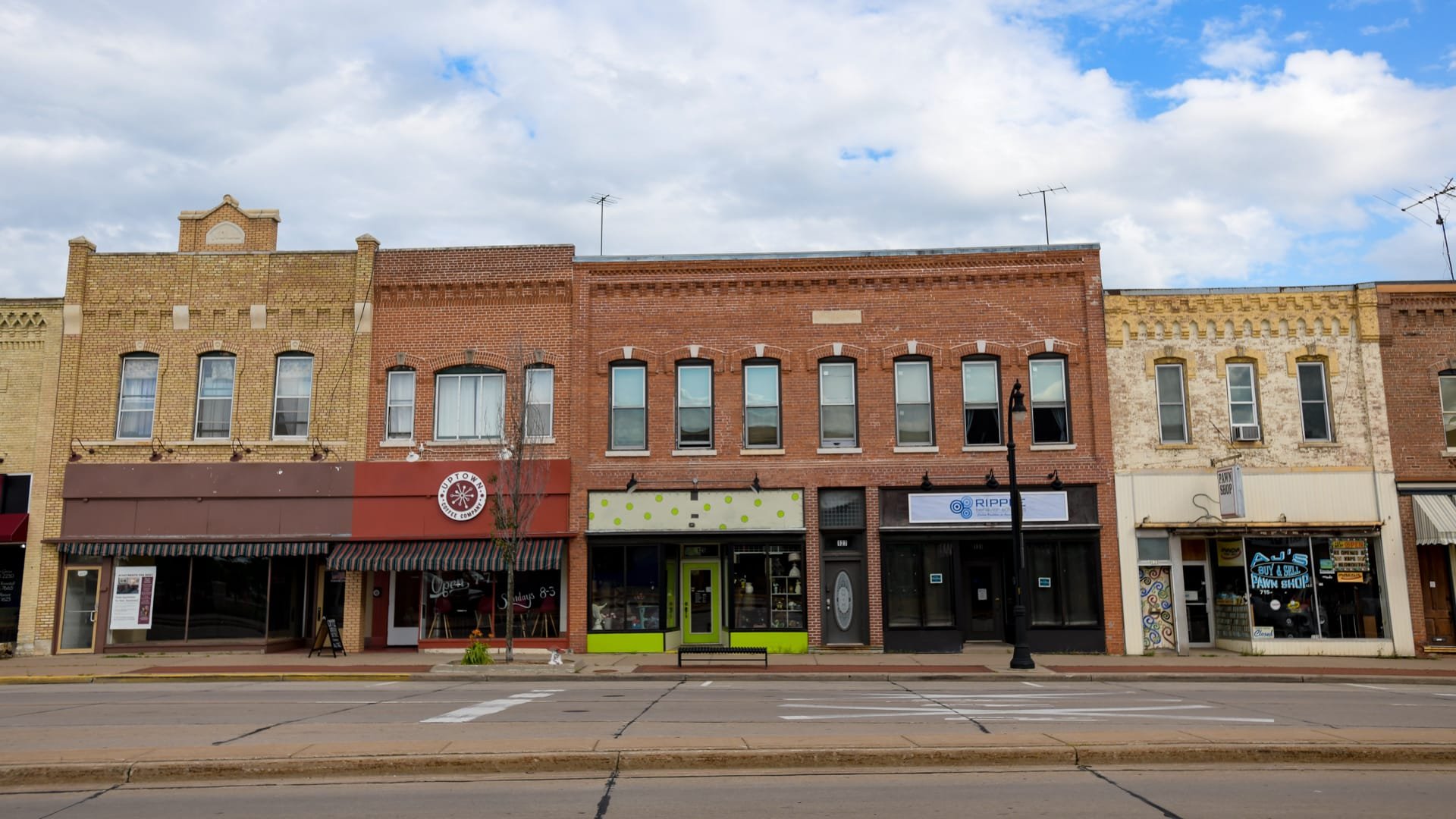
Our love for God will reshape our view of Marshfield and the surrounding areas. Central Wisconsin is not just the place we live. It is where God has placed us to love Him and reflect Him by being kind to one another, by telling the truth to one another, and by remembering we are all created in the image of God!
The Ultimate Reflection
Without skipping a beat, Jesus moves on to the second commandment: “love your neighbor.” This command is “like unto” the first command, meaning you cannot truly love God without loving your neighbor! “Neighbor” is not as limited as we define it today. So, the Lord broadens this definition to any who crosses your path.
In the aftermath of recent storms across parts of the country, we all saw something powerful. Neighbors showed up for neighbors. People opened their homes, shared food, cleared debris, and helped total strangers begin again.
Many of those acts weren’t organized or required. They came from something deeper, a love and compassion that moved people to act.
To make this point even more visual, we can say it this way, “love for God spills over into love for others.” In short, our love for God will help us love:
The police officer that pulled us over.
The city worker who is clearing the snow.
The nurse at the hospital who took longer than you wanted to answer your call button.
The misbehaving children who come from a broken home.
The elderly neighbor who cannot keep care of their yard like we think they should.
The co-worker or family member who gave us a profoundly deep emotional scar.
Loving our neighbors means caring about their wellbeing, praying for them (even when we do not believe them to be worthy of spiritual blessings), showing kindness, and serving them where needs arise…and it is our love for God that fuels our love one another.
The Ultimate Application
This passage ends with a powerful conclusion that emphasizes all the law and the prophets: “…on these two commandments hang all the law and prophets.”
When it comes down to it, the complete will of God can be summed up with two great loves…love God and love others! Our faith was never meant to stay inside the church walls! Our faith has always meant to touch the lives of the community. You and I have been placed here in this city, in our neighborhoods, and in our families for a time just like this! Consider these 9 practical ways to love God and love our neighbors:
1. Start your day with the Lord (Ps. 63:1). Love grows through attention.
2. Trust God when life is uncertain (Prov. 3:5-8)
3. Obey God (Jn. 14:15). Love for God shows up in everyday obedience to God.
4. Speak to God throughout your day (I Thess. 5:16). Loving God means you are aware of Him. Praise, repent, ask, yield.
5. Pray for those around you (Gal. 6:2; Eph. 6:18). Prayer is a simple and powerful way to love others.
6. Notice others (Phil. 2:3). Many people feel invisible to others. Learn their name, listen to understand, put others before yourself, and show genuine interest.
7. Offer small acts of kindness (Eph. 4:32). Help a neighbor, bring a meal, and check in on one who is struggling.
8. Speak encouragement (I Thess. 5:11; Prov. 15:1). Uplifting words can soften discouragement and remind them they matter.
9. Serve the community (Gal. 6:10; Mk. 10:45). Loving our neighbors includes caring about the place we call home. Prayerfully consider volunteering in the church and some of the community organizations we help throughout the year; like, the First Choice Pregnancy Center, Shirely’s House of Hope, the Ronald McDonald House, the Hannah Center, and food drives.
At the end of the day, it really does come back to this: love God…love people. Not just in our words, but in the way we live, respond, and serve the people who cross our path.
If we live this out, the impact on Marshfield will be powerful! Marshfield will not just be the place where we live. It will be the place where God’s love is seen, felt, and experienced through each one of us. And that’s how a town is truly blessed.
May we all love God fully and allow that love to overflow into how we treat, serve, and care for every person God places in our path.